
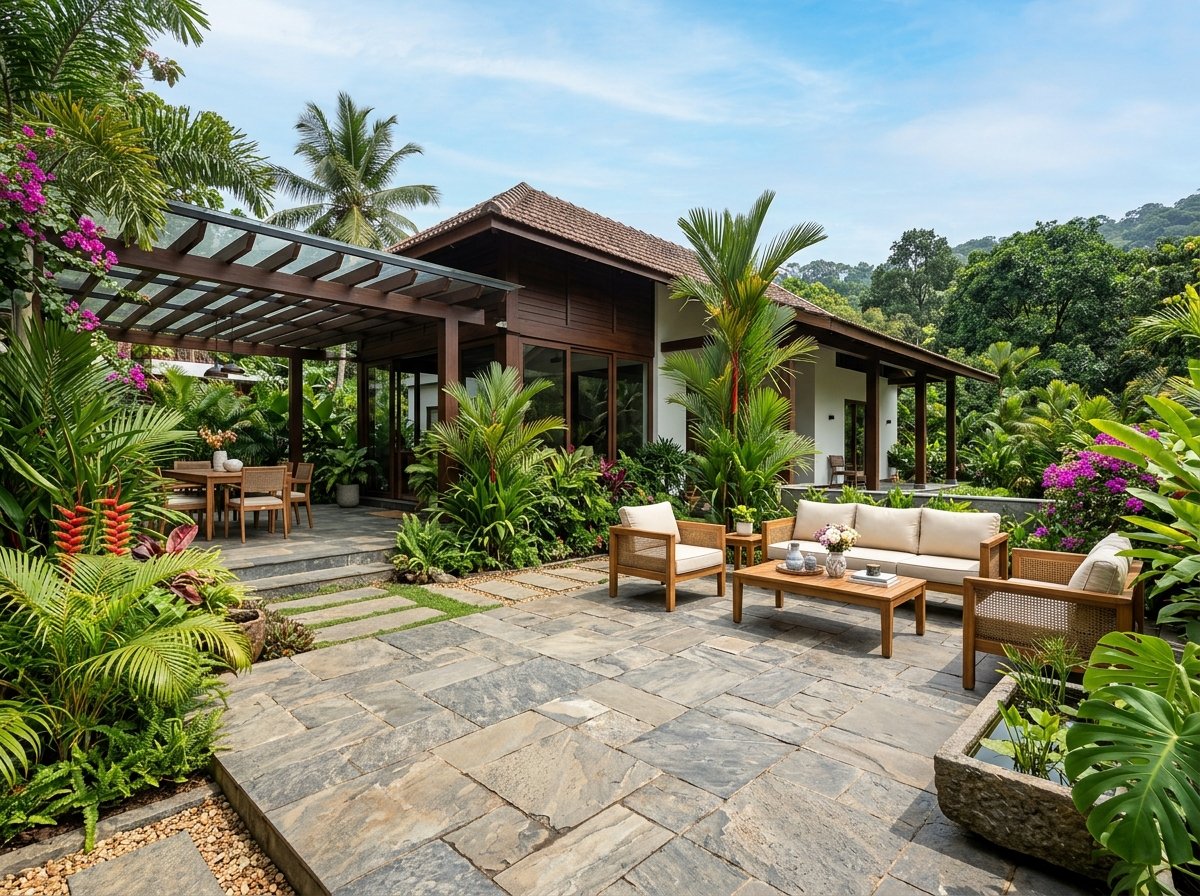
Outdoor Flooring Services in Kerala
What Is Outdoor Flooring?
Outdoor flooring refers to the paved, tiled, or decked surface used on patios, walkways, courtyards, and other exterior areas, selected primarily for slip resistance, water drainage, and weather durability. It differs from indoor flooring in one key respect: it must perform under direct rain, UV exposure, and temperature swings without becoming slippery, cracking, or growing algae. In Kerala, this makes material porosity and surface texture as important as appearance.
Common outdoor flooring types include:
- • Natural stone flooring — granite, laterite, or sandstone surfaces
- • Anti-skid vitrified tiles — engineered ceramic tiles with slip-resistant texture
- • Cobblestone and paver flooring — interlocking unit paving
- • Exposed aggregate flooring — textured concrete with embedded stone
- • Weather-treated wood decking — sealed timber for raised outdoor surfaces
- • Permeable flooring systems — surfaces that allow water to drain through
What Outdoor Flooring Services Does Benglavil Offer in Kerala?
Benglavil installs eight types of outdoor flooring in Kerala: natural stone, anti-skid vitrified tiles, cobblestone and paver flooring, laterite stone, exposed aggregate, weather-treated wood decking, permeable flooring systems, and anti-slip coatings.
Natural Stone Flooring
Natural stone flooring uses granite, sandstone, or other quarried stone slabs for patios and walkways, chosen for durability and a non-uniform, textured surface that resists slipping when wet.
Anti-Skid Vitrified Tile Flooring
Anti-skid vitrified tiles are engineered ceramic tiles with a textured finish designed to reduce slipping, making them suited to Kerala’s frequent rain and high-moisture conditions.
Cobblestone & Paver Flooring
Cobblestone and paver flooring uses interlocking stone or concrete units, allowing water to drain between joints rather than pooling across a solid surface.
Laterite Stone Flooring
Laterite stone flooring uses a material native to Kerala, valued for its natural breathability and moisture tolerance in humid, high-rainfall conditions.
Exposed Aggregate Flooring
Exposed aggregate flooring is textured concrete with embedded decorative stone, providing a naturally slip-resistant surface suited to pool decks and courtyards.
Weather-Treated Wood Decking
Weather-treated wood decking uses sealed, moisture-resistant timber for raised outdoor platforms, requiring periodic resealing to withstand Kerala’s humidity.
Permeable Flooring Systems
Permeable flooring systems allow rainwater to pass through the surface into the ground below, reducing runoff and surface pooling during heavy monsoon rainfall.
Anti-Slip Coatings & Finishes
Anti-slip coatings are textured sealants applied to existing flooring to improve grip without full replacement, a common upgrade for older Kerala patios and walkways.
Why Choose Benglavil for Outdoor Flooring in Kerala?
Benglavil selects outdoor flooring materials specifically for Kerala’s rainfall, humidity, and UV exposure, rather than offering a single standard material across all sites. This differs from generic flooring contractors in four ways:
Climate-first material selection
Flooring chosen for water tolerance and slip resistance, not appearance alone.
Local material expertise
Practical experience with laterite and regional stone performance over time.
Sub-base and drainage focus
Proper base preparation to prevent cracking and water pooling.
Integrated design
Flooring planned alongside patios, driveways, and overall hardscape layout.
What Is the Outdoor Flooring Installation Process?
Benglavil’s outdoor flooring installation follows five steps: site assessment, material selection, sub-base preparation, installation, and sealing.
-
1
Site Assessment
Evaluating slope, drainage, and foot-traffic patterns across the area.
-
2
Material Selection
Choosing flooring based on slip resistance, water tolerance, and design fit.
-
3
Sub-Base Preparation
Grading and compacting the base layer to prevent shifting or cracking.
-
4
Installation
Laying and setting the flooring material to specification.
-
5
Sealing & Finishing
Applying sealants or anti-slip coatings for long-term weather resistance.
Which Factors Matter Most for Outdoor Flooring in Kerala’s Climate?
Slip resistance, water absorption rate, and UV durability are the three factors that most affect how well outdoor flooring performs in Kerala.
Slip resistance
Flooring must stay safe underfoot during frequent and heavy rainfall.
Water absorption rate
Low-porosity or permeable materials reduce pooling and moss growth.
UV and heat resistance
Materials must resist fading and surface degradation under direct sun.
Algae and moss resistance
Textured or treated surfaces reduce buildup in consistently humid conditions.
What Areas in Kerala Does Benglavil Serve?
Benglavil provides outdoor flooring design and installation across Kerala, including Kochi, Thiruvananthapuram, Kozhikode, Thrissur, Kottayam, Alappuzha, Kannur, Palakkad, and Malappuram.